
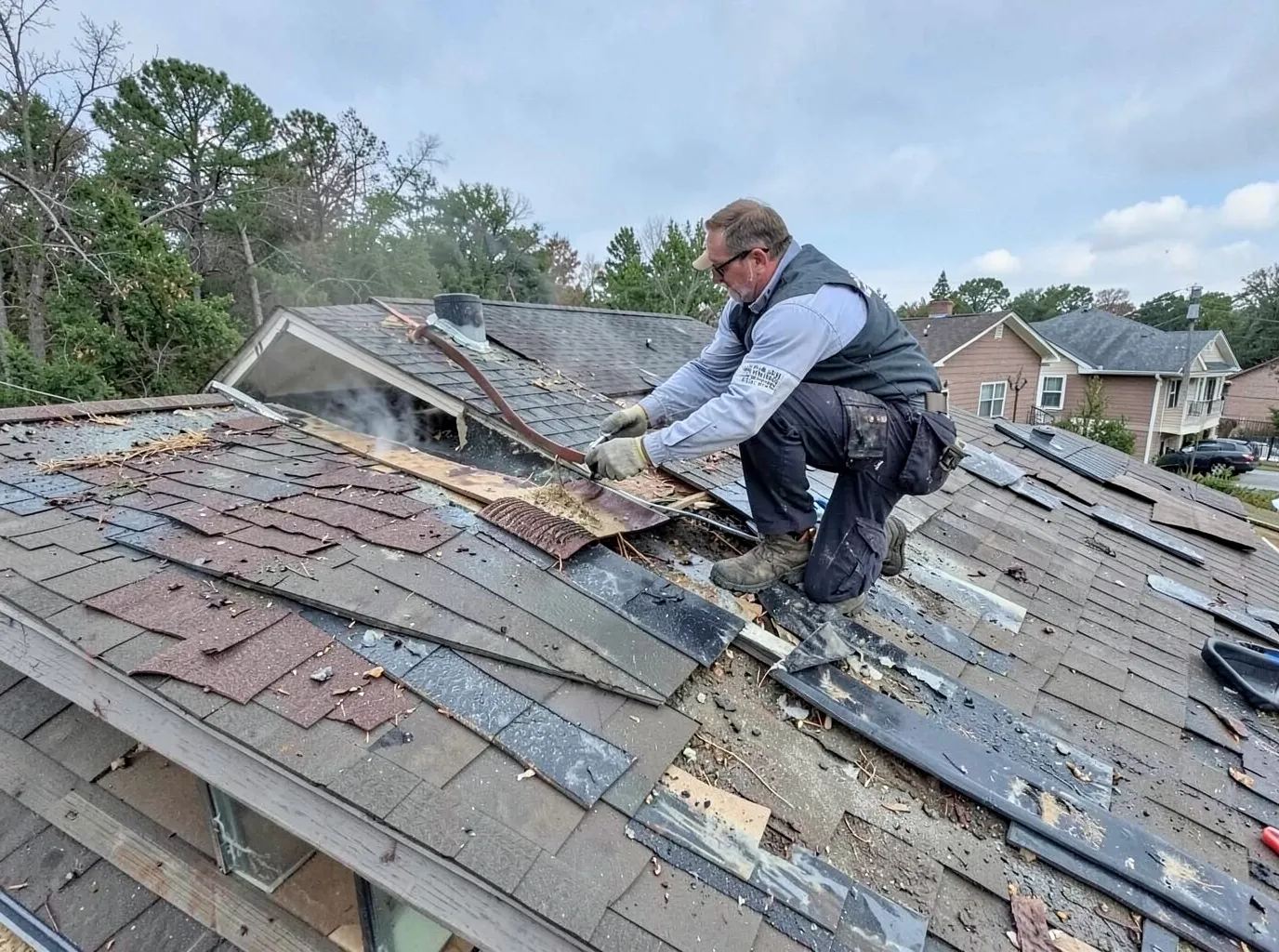
Norman sees frequent severe thunderstorms that bring high winds, hail, and heavy rain, especially during humid summers and into colder winter fronts. These storms often damage asphalt shingle roofs common on homes near the University of Oklahoma campus and in established areas like Hall Park. Wind can lift shingles along ridges and eaves while hail creates fractures that allow water intrusion days or weeks later. Older housing stock in Downtown Norman and Noble frequently shows hidden deck damage once the surface layer is removed.
Repairs here must account for Cleveland County building practices and the mix of single-story ranches and two-story homes near Lake Thunderbird and Reaves Park. Tarping must hold through repeated storm cells without trapping moisture that leads to mold on plywood sheathing. Matching existing shingle profiles and colors matters on streets where homes were built in the 1970s and 1980s, and crews routinely check flashing around chimneys and skylights that storm winds loosen first.
Emergency response focuses on stopping active leaks before they reach interiors, particularly in neighborhoods like Campus Corner where proximity to the Lloyd Noble Center and Sam Noble Museum means many roofs sit under mature trees that drop limbs during high winds. Proper underlayment replacement and ice-and-water shield installation at valleys become critical once cold winter temperatures return and any remaining moisture freezes.
Technician insight
In Norman, the thing that catches most people out with Storm Damage Roof Repair is how quickly hail fractures let water reach the deck on 30- to 40-year-old shingles around the University of Oklahoma campus and Hall Park after just one or two severe thunderstorm cells move through Cleveland County.
Hail and Wind Damage on Hall Park Home
A homeowner in Hall Park noticed water stains after a late-spring thunderstorm. Inspection found multiple hail fractures and lifted shingles along the south-facing slope. Crew removed damaged material, replaced underlayment and shingles to match the existing roof, and sealed all flashing. No further leaks appeared during the next several rain events.
Storm Damage Roof Repair Services We Offer
✓Hail Damage Assessment
Detailed inspection of granule loss and fractures on shingles after Norman hail events, with documentation for insurance claims.
✓Wind-Lifted Shingle Repair
Re-securing or replacing shingles torn by thunderstorm winds common along ridges and eaves in Cleveland County homes.
✓Emergency Roof Tarping
Rapid deployment of heavy-duty tarps to stop active leaks after severe storms in areas like Moore and Hall Park.
✓Storm Leak Detection
Infrared and moisture meter testing to locate hidden water intrusion behind storm-damaged flashing in older Norman roofs.
✓Gutter and Downspout Storm Repair
Straightening, re-hanging, and sealing gutters knocked loose by high winds or clogged by hail debris near Lake Thunderbird.
Storm Damage Roof Repair Cost in Norman, OK
| Service | Typical Range | What Affects It |
|---|---|---|
| Emergency tarping | $350–$650 | Size of affected area and roof pitch |
| Hail damage section repair | $800–$2,200 | Number of squares and shingle match |
| Wind-lifted ridge repair | $450–$950 | Linear feet and underlayment replacement |
| Full storm leak investigation | $175–$325 | Includes attic access and moisture readings |
Ranges are typical for Norman, OK and confirmed with an exact written quote before any work starts.
How it works
- 1
Initial Storm Assessment
Crew inspects roof from ground and attic, noting hail bruising, lifted shingles, and active leaks after the latest thunderstorm.
- 2
Temporary Protection
Secure tarps or temporary patches to prevent further water entry until permanent materials arrive.
- 3
Damage Documentation
Photograph and measure affected sections for insurance and prepare detailed scope for Norman permitting.
- 4
Permanent Repair
Replace damaged sections, restore flashing, and verify no active leaks remain before final walkthrough.
Pricing
Upfront quotes after on-site inspection; final cost depends on storm damage extent and access.